Fragrance OEM and ODM: Common Mistakes E-Commerce Brands Make With Factories
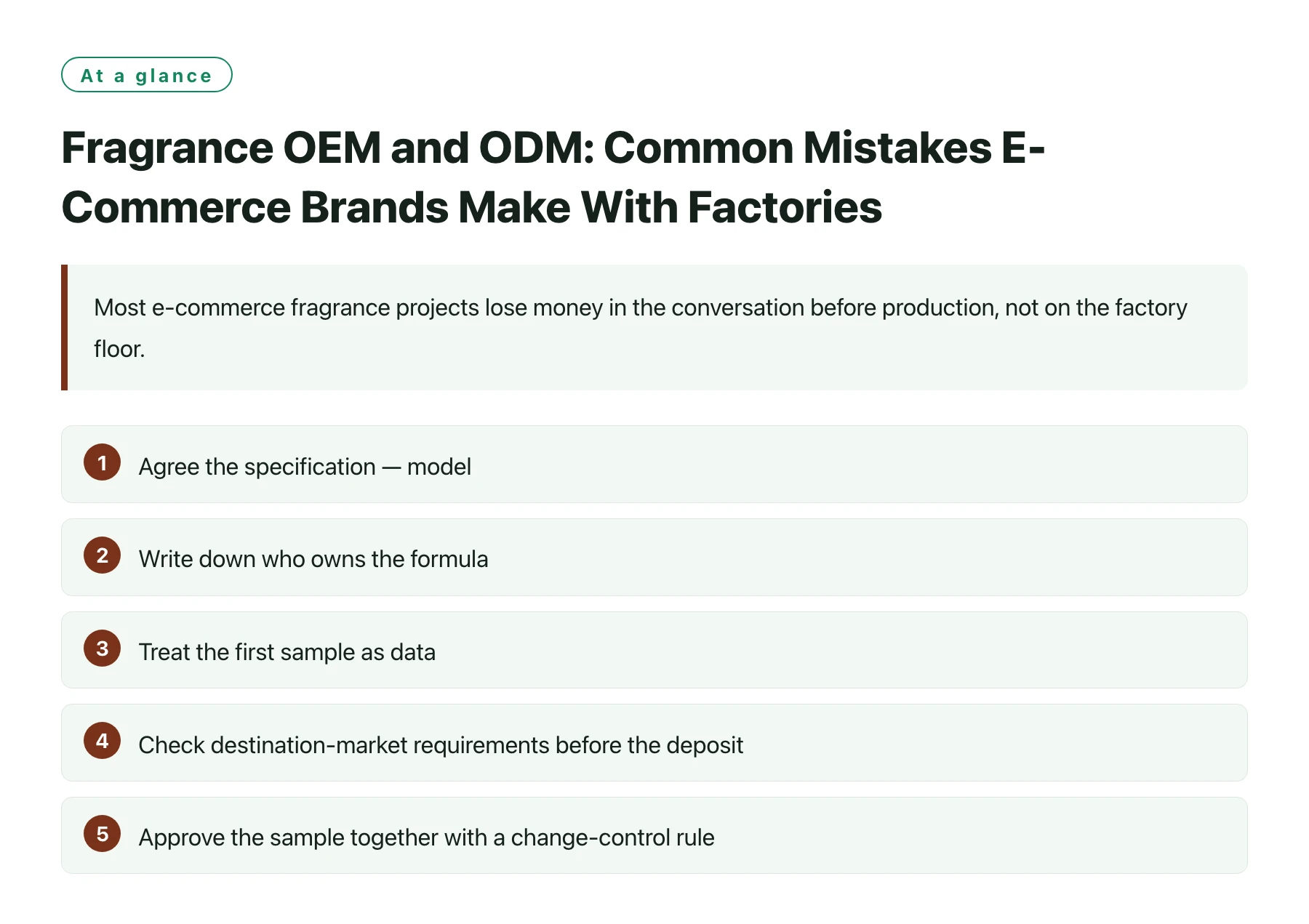
Most e-commerce fragrance projects lose money in the conversation before production, not on the factory floor. The same handful of mistakes repeats: pricing before specification, leaving ownership unwritten, treating the first sample as the final product, discovering compliance at the port, and approving a sample without a change-control rule. Each one is fixable with a short written decision, and each costs far less to fix early.
Key takeaways
- Agree the specification — model, dosage, batch size, packaging and documentation — before comparing prices; otherwise the lowest quote is simply the one with the fewest things included.
- Write down who owns the formula, the mould and the design files; the model you chose, OEM or ODM, determines the default answer, and the contract must state it.
- Treat the first sample as data, not as the product: a sample approved before resting and stability checks has proven nothing yet.
- Check destination-market requirements before the deposit, because EU cosmetics rules, allergen labelling and safety documentation change the pack for online brands that sell across borders.
- Approve the sample together with a change-control rule, so material swaps, dosage edits and packaging changes come back to you before they reach the production line.
E-commerce fragrance brands operate on a different clock than retail brands: the listing goes live before the stock exists, reviews land within days of delivery, and the product page makes promises the bottle has to keep. That is why the same supplier mistakes hurt more online — a scent drift between sample and bulk becomes a stream of one-star reviews instead of a quiet retail meeting.
The mistakes below are the ones buyers repeat across projects. None of them is a factory problem; each is a failure of a written decision. This article lists the symptom, the cause and the fix for each, so the next conversation with a manufacturer starts from a page, not from a feeling.
The good news is that the fixes are short: a one-page brief, a one-page contract addendum, and a rule for how samples get approved.
The mistakes that show up in nearly every project
Pricing first, specification never
The first question most brands ask a factory is the price per bottle. But the price depends on decisions that have not been made: the dosage, the batch size, the packaging, the tests, the documentation and the market. Ask for a written specification first — product form, target markets, volume range and the documents you expect — and then compare quotes on that identical scope.
OEM and ODM left implied
In OEM the brand brings the formula and the factory builds to it; in ODM the factory develops from a brief. The two models put the technical risk and the ownership of the formula on different parties, and the difference belongs in the contract. Some factories present both models under one roof and one page — Xuelei fragrance OEM and ODM manufacturer is this kind of positioning — which makes the scope conversation shorter, but the written clause is still yours to get.
The first sample as the finish line
A fresh sample of a diluted perfume is not the same liquid as a rested bulk sample, and a sample approved on the day it is filled has not been tested for clarity, stability or consistency. Approve the sample only with its records — formula revision, concentrate code, dosage, dilution and resting dates — and treat the first production batch as a separate approval event.
Compliance discovered at the port
For a brand selling into the EU, the finished product needs the right framework behind it: the responsible person, a safety assessment, and the notifications and label checks the market requires before the product is placed on sale [1]. Brands that ask this question after production find that a compliant product needs formulation, documentation and label changes, not a stamp.
Approval without change control
The approved sample is a snapshot of a formula, a process and a package. Without a written change-control rule, a supplier can swap an alcohol supplier, adjust a dosage or change a pump and still call the result 'the approved product'. GMP-style frameworks make batch traceability routine precisely so that changes stay visible and auditable [2]; sign that rule at approval time, not at dispute time.
Mistake, symptom, fix
| Mistake | Typical symptom | The fix |
|---|---|---|
| Pricing first | Quotes vary wildly for 'the same product' | Send an identical written spec to each candidate |
| Model left implied | Dispute later over who owns the formula | Put OEM or ODM, ownership and the mould in the contract |
| First sample approved too fast | Bulk batch drifts from the approved sample | Approve with records, then approve the first bulk separately |
| Compliance discovered late | Delays, relabelling or a blocked shipment | Confirm market requirements before the deposit |
| No change control | Silent substitutions after approval | Sign a change-control rule at sample approval |
Notice the pattern: every fix is a sentence written earlier. None of them requires technical knowledge the factory does not already have; they require the brand to ask.
What the e-commerce operation adds
The listing is a promise
A product page that promises 'long lasting' or 'fresh citrus opening' is a specification the bottle has to meet on every batch. E-commerce brands feel batch drift faster than anyone, because the same disappointed customer writes the review, returns the item and tells the algorithm. Define the claims you make, and make sure the supplier knows those claims are part of the release criteria.
The sample trap
Many online brands sell trial sizes or sample sets before the full bottle. That is a good product strategy and a dangerous quality commitment: every sample you send is a reference your customers will compare the bottle against. Keep one sealed reference of what you actually shipped, and compare batch releases against it, not against your memory of the scent.
Market-by-market labels
A formula or dosage change can alter the allergen and ingredient information on the label, which matters more the more markets you sell into. Keep the label text versioned with the formula revision, so a change in the concentrate is always mirrored in the artwork, the safety documents and the listings.
If three factories quote three very different prices for the same brief, you are not comparing prices — you are comparing omissions. The scope documents make the difference visible before anyone signs.
Where to start tomorrow
Write the one-page factory brief tonight: product form, target markets, volume range, model (OEM or ODM), timeline, and the documents you expect with each sample. Send it to three candidates and ask each to set out their OEM/ODM manufacturing services in the same one-page format — which steps are in house, which are bought in — so the comparison rests on identical documents.
On the same page, note who owns the formula, the mould and the design files, and add the sentence 'no material, dosage, packaging or process change without written approval'. Shortlist candidates on how they answer the document request, not on how fast they reply to the price question.
The verification step is shorter when a factory publishes what it works to: a manufacturer such as Xuelei that lists its certifications publicly gives you a concrete list to check with the issuing bodies, instead of a promise to photocopy later.
Sources
- European Commission: Cosmetics in the EU —— The European Commission's overview of EU cosmetics rules, including the responsible person, product information file and safety report requirements.
- SGS: Cosmetics, Personal Care & Household Testing —— Testing, inspection and certification services for cosmetics and personal care, including microbiological, stability and safety testing aligned with cosmetics GMP.
Frequently asked questions
What should my first message to a factory include?
Product form, target markets, volume range, the model you are considering (OEM or ODM), the timeline, and the documents you expect with each sample. The more specified the brief, the more comparable the quotes.
Is it normal for factories to quote very different prices?
Yes, when the scope differs — dosage, packaging, testing and documentation all move the figure. Make the scope identical first, then the price comparison means something.
Do I need a formal contract for a first trial order?
Yes, a short one: the model, ownership of the formula and mould, the sample approval reference, a change-control rule and payment terms. Five clauses cover the disputes that actually happen.
How do I check compliance for selling in the EU myself?
Confirm who the responsible person is, that a cosmetic product safety assessment exists, that notifications and label requirements are met, and verify the supplier's pack with the relevant national authority before production.
Can a small e-commerce brand negotiate ownership of the formula?
Often yes, when an exclusivity or development fee is agreed; without that, never assume ownership is included. Put it in writing and it stops being an assumption.