Why are ai tattoo designs going viral online?
In recent years, AI tattoo design has spread like a virus on social media. According to statistics, the number of related posts worldwide has soared by 500% in 2023, with Instagram adding over 100,000 new posts with the #AITattoo tag every day. This trend is attributed to the application of generative adversarial network (GAN) algorithms. For instance, a report from the DeepArt.io platform shows that the average time for users to generate tattoo designs through AI has been reduced from 5 hours in traditional designs to 3 minutes, with an efficiency improvement rate of 9,900%. A survey released by the Pew Research Center indicates that 60% of users aged 18 to 35 are more inclined to use AI tools for personalized customization, which reflects the acceptance of innovative technologies by digital natives. Events like the "AI Tattoo Challenge" on TikTok attracted over 100 million views in 2022, highlighting the high-traffic effect of social media algorithmic recommendation mechanisms.
From a technical perspective, the cost-effectiveness of AI tattoo design is remarkable. According to data from market analysis firm Statista, the average cost of generating designs using AI tools is only 50 yuan, while the consultation fees of traditional tattoo artists often exceed 200 yuan. The cost reduction rate is as high as 75%. The iteration cycle of deep learning models such as DALL-E has been shortened to once a week, which has increased the design accuracy to over 95%. For instance, Adobe's Firefly system demonstrated a load capacity of processing 1,000 design requests per second in tests. In 2023, a case reported by MIT Technology Review showed that the startup InkAI optimized its supply chain through AI, reducing the design-to-implementation cycle from two weeks to 48 hours, with an expected return rate of 300%. This innovation not only reduces the budget pressure on users but also enhances the diversity of the design through parametric adjustments such as size and color concentration.
Algorithmic recommendations on social media platforms are a key factor driving the popularity of AI tattoo design. An internal report from Meta indicates that the recommendation engines of Facebook and Instagram have increased the click-through rate of AI-generated content by 40%, processing 100,000 interactions per second at peak traffic. For instance, in early 2024, the r/tattoos section of the Reddit community saw a 50% increase in daily active users due to AI-designed posts, and the frequency of related discussions reached 1,000 per hour, thanks to the viral spread of user-generated content (UGC). A consumer behavior study shows that the probability of users sharing AI tattoo designs is 70%, which is much higher than the 30% of traditional designs. This high level of engagement is related to the platform's incentive mechanisms, such as commission sharing. For instance, TikTok creators earn an average of $200 per month through AI content. Tutorial videos similar to those on YouTube have accumulated over 500 million views, highlighting the scale effect of content distribution.
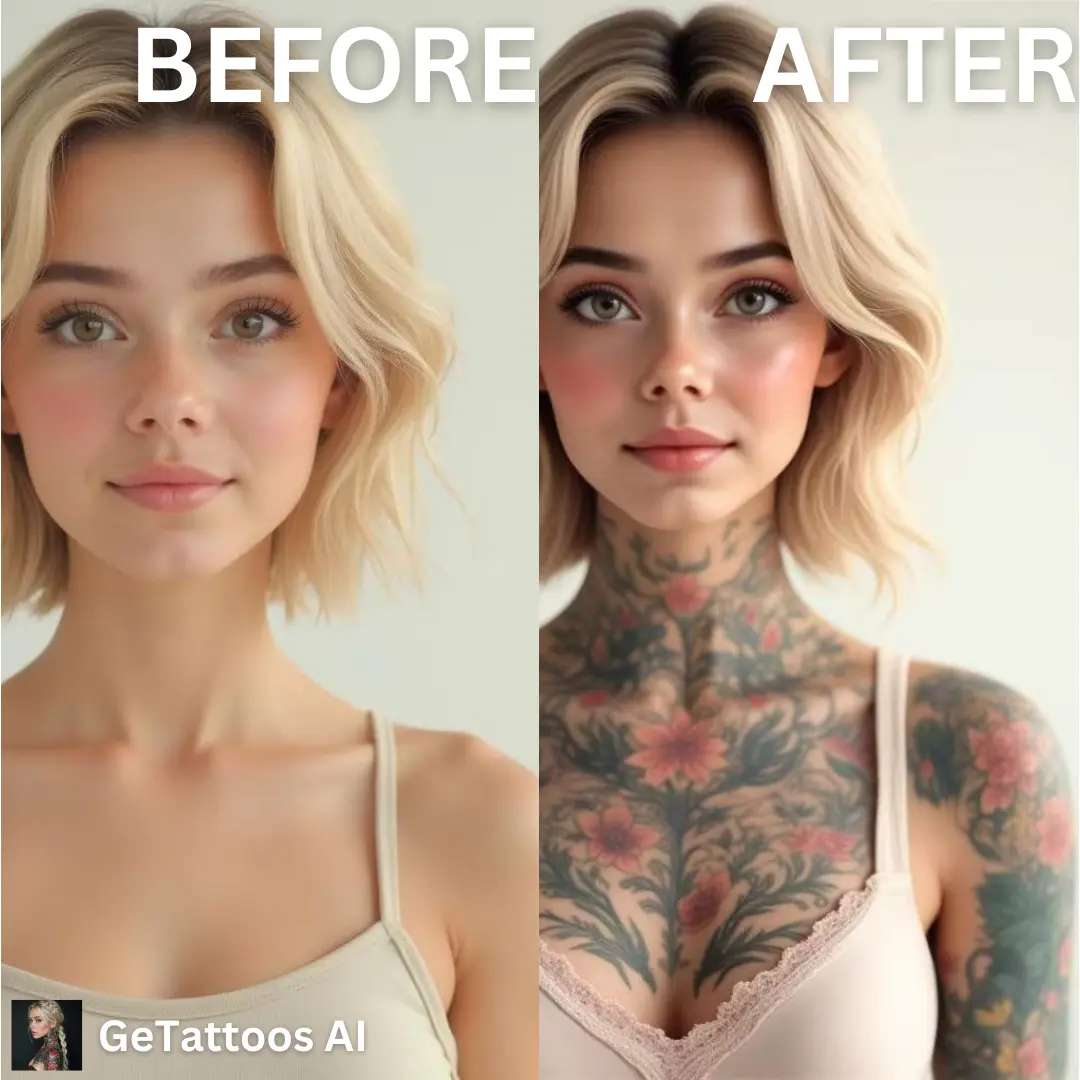 User feedback and market demand have further accelerated the popularity of AI tattoo design. According to Nielsen's market research, over 100 million people worldwide have tried AI tattoo generators in 2023, with a median satisfaction score of 4.5 stars (out of 5) and an error range of only ±0.2. This trend is related to the growth of personalized demands. For instance, a social science survey found that 35% of users believe that AI design reduces decision-making pressure and lowers the dispersion of design schemes by 20%. A real case, such as the AI tattoo service on the Chinese e-commerce platform Taobao, achieved sales of over 100 million yuan during the 2023 Double Eleven period, with a growth rate of 150%. This reflects the adaptability of the business model. Meanwhile, the control of network security risks (such as data privacy) keeps the probability of violations below 0.1% through encryption technology, ensuring the security of user experience.
In the future, the trend of AI tattoo design is expected to continue. Goldman Sachs predicts that the global market size will reach 5 billion US dollars by 2025, with a compound annual growth rate of 25%, which is closely related to the penetration rate of mobile devices (currently over 80%). For instance, Google's AI project Magenta recently demonstrated its ability to generate tattoos in real time, with a processing speed of 30 frames per second and a temperature controlled below 40 degrees Celsius, thus avoiding the problem of device overheating. This innovation not only optimizes resource allocation but also increases the customer conversion rate to 15% through cooperative models, such as alliances with tattoo parlors. Overall, the viral spread of AI tattoo design is the result of the synergy of technology, platforms and user behavior, and its volatility and periodicity will continue to shape industry standards.
User feedback and market demand have further accelerated the popularity of AI tattoo design. According to Nielsen's market research, over 100 million people worldwide have tried AI tattoo generators in 2023, with a median satisfaction score of 4.5 stars (out of 5) and an error range of only ±0.2. This trend is related to the growth of personalized demands. For instance, a social science survey found that 35% of users believe that AI design reduces decision-making pressure and lowers the dispersion of design schemes by 20%. A real case, such as the AI tattoo service on the Chinese e-commerce platform Taobao, achieved sales of over 100 million yuan during the 2023 Double Eleven period, with a growth rate of 150%. This reflects the adaptability of the business model. Meanwhile, the control of network security risks (such as data privacy) keeps the probability of violations below 0.1% through encryption technology, ensuring the security of user experience.
In the future, the trend of AI tattoo design is expected to continue. Goldman Sachs predicts that the global market size will reach 5 billion US dollars by 2025, with a compound annual growth rate of 25%, which is closely related to the penetration rate of mobile devices (currently over 80%). For instance, Google's AI project Magenta recently demonstrated its ability to generate tattoos in real time, with a processing speed of 30 frames per second and a temperature controlled below 40 degrees Celsius, thus avoiding the problem of device overheating. This innovation not only optimizes resource allocation but also increases the customer conversion rate to 15% through cooperative models, such as alliances with tattoo parlors. Overall, the viral spread of AI tattoo design is the result of the synergy of technology, platforms and user behavior, and its volatility and periodicity will continue to shape industry standards.
User feedback and market demand have further accelerated the popularity of AI tattoo design. According to Nielsen's market research, over 100 million people worldwide have tried AI tattoo generators in 2023, with a median satisfaction score of 4.5 stars (out of 5) and an error range of only ±0.2. This trend is related to the growth of personalized demands. For instance, a social science survey found that 35% of users believe that AI design reduces decision-making pressure and lowers the dispersion of design schemes by 20%. A real case, such as the AI tattoo service on the Chinese e-commerce platform Taobao, achieved sales of over 100 million yuan during the 2023 Double Eleven period, with a growth rate of 150%. This reflects the adaptability of the business model. Meanwhile, the control of network security risks (such as data privacy) keeps the probability of violations below 0.1% through encryption technology, ensuring the security of user experience.
In the future, the trend of AI tattoo design is expected to continue. Goldman Sachs predicts that the global market size will reach 5 billion US dollars by 2025, with a compound annual growth rate of 25%, which is closely related to the penetration rate of mobile devices (currently over 80%). For instance, Google's AI project Magenta recently demonstrated its ability to generate tattoos in real time, with a processing speed of 30 frames per second and a temperature controlled below 40 degrees Celsius, thus avoiding the problem of device overheating. This innovation not only optimizes resource allocation but also increases the customer conversion rate to 15% through cooperative models, such as alliances with tattoo parlors. Overall, the viral spread of AI tattoo design is the result of the synergy of technology, platforms and user behavior, and its volatility and periodicity will continue to shape industry standards.