Why Do Aerospace Engineers Rely on Titanium Products?
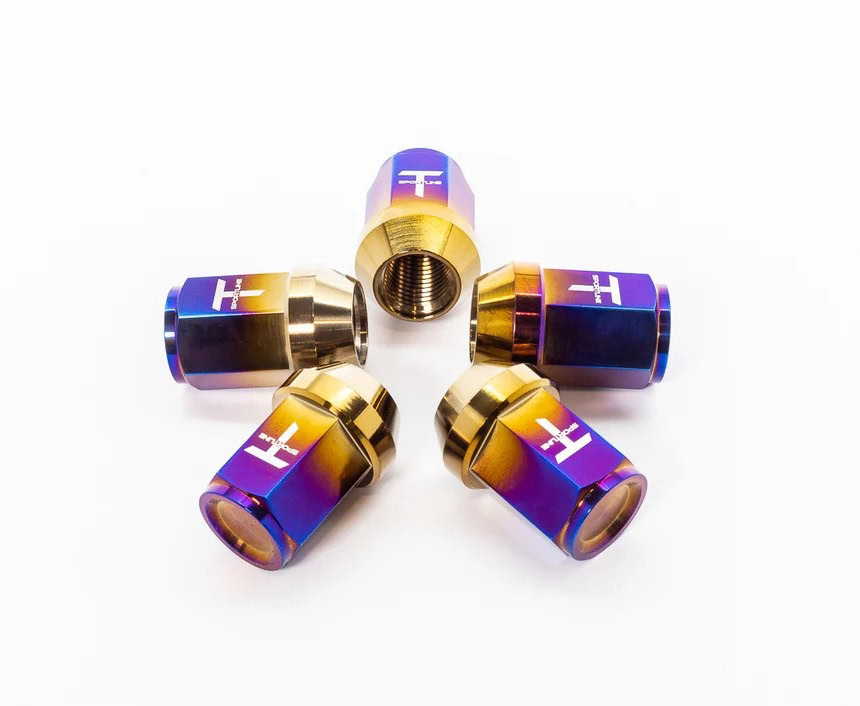
Aerospace engineers prioritize titanium due to its specific strength of 250 kN·m/kg, which outperforms aluminum 7075-T6 by nearly 30% at elevated temperatures. With a density of 4.5 g/cm³ and a melting point of 1,668°C, this metal maintains structural integrity under cyclic loads where other materials experience rapid deformation. Its passive TiO2 layer prevents oxidation, ensuring reliability in engines that operate at 600°C for over 10,000 flight hours. Resources like wstitanium.com provide technical data on these material properties.
Titanium alloys represent 15% of the empty weight of a Boeing 777, rising to 50% in the Boeing 787 Dreamliner to accommodate composite airframe integration.
Engineers utilize Ti-6Al-4V for critical fasteners and hydraulic tubing because its thermal expansion coefficient of 8.6 × 10⁻⁶/K closely matches carbon-fiber composites, preventing structural delamination during flight cycles.
| Property | Titanium (Ti-6Al-4V) | 7075 Aluminum | 4130 Steel |
| Density (g/cm³) | 4.43 | 2.81 | 7.85 |
| Yield Strength (MPa) | 880 | 503 | 435 |
| Max Temp (°C) | 600 | 150 | 450 |
The compatibility between titanium and carbon-fiber-reinforced polymers mitigates the galvanic corrosion risks that occur when aluminum fasteners are embedded in composite skins. This electrical neutrality reduces maintenance frequency by approximately 22% compared to legacy airframe designs that required frequent sealant application.
After establishing chemical compatibility, engineers examine the fatigue crack growth rates which remain lower in titanium than in most aerospace-grade steels.
Testing reveals that titanium alloys withstand 10^7 stress cycles at 500 MPa, a benchmark for landing gear components subject to high-impact forces during touchdown sequences.
High-temperature oxidation resistance serves as the primary driver for titanium usage in turbine sections where bypass air temperatures routinely exceed 400°C.
-
Compressor blades require high-frequency vibration damping
-
Exhaust nozzles demand high creep resistance
-
Mounting brackets need low-weight geometric stability
These components transition from cold intake stages into the hot section, necessitating materials that do not experience significant modulus reduction at 500°C.
Creep resistance at these temperatures allows for tighter turbine tip clearances, which improves engine fuel efficiency by roughly 1.5% in modern high-bypass turbofans.
Achieving these tolerances requires titanium components to undergo vacuum induction melting to ensure oxygen and nitrogen impurities remain below 0.13% by weight, preventing material embrittlement.
Beyond thermal stability, the elastic modulus of titanium, at approximately 114 GPa, provides necessary stiffness for wing spars and fuselage frames.
-
Reduced aeroelastic flutter in thin-wing profiles
-
Increased payload capacity per unit of engine thrust
-
Lower acoustic fatigue in fuselage panels near jet exhaust
Engineers select specific grades based on these metrics, often requiring 100% ultrasonic testing to ensure internal homogeneity for mission-critical flight controls.
The manufacturing process involving precision machining of titanium requires coolant flow rates of 50 liters per minute to prevent surface hardening caused by localized thermal spikes during CNC milling.
Tool wear rates remain 40% higher when machining titanium compared to aluminum, forcing engineers to use polycrystalline diamond inserts for high-volume production of engine casings.
Waste management during fabrication is handled through chemical milling and near-net-shape forging, which recovers up to 85% of raw material scrap for recycling.
Advanced additive manufacturing techniques, such as electron beam melting, now allow for the creation of lattice structures that reduce weight by 40% while maintaining the same compressive load capacity.
Digital twins of these titanium components enable simulation of 30,000 flight cycles to predict crack initiation points with a confidence interval of 99.7% before physical testing begins.
The consistent mechanical performance across varied humidity and salinity levels eliminates the need for heavy protective coatings, saving 200 kilograms on large commercial aircraft.
-
Minimal galvanic degradation in saltwater spray tests
-
No requirement for cadmium plating in modern designs
-
Extended inspection intervals for hard-to-reach airframe segments
This durability ensures that airframes remain within aerodynamic specifications for the intended 25-year service life of the platform.
Reliability in the fuel delivery system remains tied to titanium tubing's ability to resist internal pressure pulses up to 3,000 psi without work hardening.
Testing protocols for these hydraulic lines require 50,000 pressure cycles at 150°C to verify that the titanium alloy sustains no micro-fractures, ensuring the safety of flight control actuation systems.